
How Artificial Intelligence Is Shaping the Future
Artificial Intelligence is no longer a futuristic concept—it is a present-day force transforming how we live, work, learn, and innovate. From enterprise automation to intelligent decision-making, AI is shaping a future defined by speed, intelligence, and human-AI collaboration.
Artificial Intelligence (AI) has evolved from academic research into one of the most influential technologies of the modern era. What once required human intuition and manual analysis can now be performed at scale, in real time, and with increasing accuracy. Today, AI systems interpret data, learn from experience, predict outcomes, and support strategic decisions across industries.
The future shaped by AI is not about replacing humans—it is about augmenting human capability. Organizations that understand this distinction are leveraging AI to unlock productivity, creativity, and long-term growth. As we move forward, AI will continue to redefine industries, reshape economies, and alter how societies function.
1. Artificial Intelligence as the Foundation of Digital Transformation
Digital transformation once meant moving from paper-based systems to software. Today, it means embedding intelligence into every digital process. AI is the foundation of this new phase of transformation, allowing systems to learn, adapt, and improve continuously.
Businesses are no longer satisfied with static dashboards or historical reports. AI-driven platforms provide predictive insights, automate decisions, and identify patterns humans may never notice. This intelligence-first approach enables organizations to become proactive rather than reactive.
- AI-driven analytics replacing manual reporting
- Predictive models guiding strategic decisions
- Real-time intelligence across departments
- Self-optimizing digital systems
2. AI in Business Operations and Enterprise Management
AI is transforming core business operations by improving efficiency, accuracy, and scalability. Enterprise platforms such as ERP, CRM, and HRMS systems are now infused with machine learning and automation capabilities.
Instead of managing systems manually, organizations rely on AI to forecast demand, optimize inventory, detect fraud, and personalize customer interactions. This leads to better outcomes with fewer resources.
Key Enterprise Use Cases
- AI-powered ERP for financial forecasting
- Customer behavior prediction in CRM
- Smart HR analytics for workforce planning
- Automated procurement and supply chain optimization
3. Intelligent Automation and the Rise of Smart Workflows
Automation has existed for decades, but AI has transformed it into intelligent automation. By combining machine learning, natural language processing, and robotic process automation (RPA), businesses can automate complex workflows that previously required human judgment.
Intelligent automation adapts to changes, learns from exceptions, and improves over time. This allows organizations to scale operations without increasing operational complexity.
- Invoice processing with AI validation
- Automated customer onboarding
- Smart document processing
- Cross-department workflow orchestration
4. The Future of Work: Human-AI Collaboration
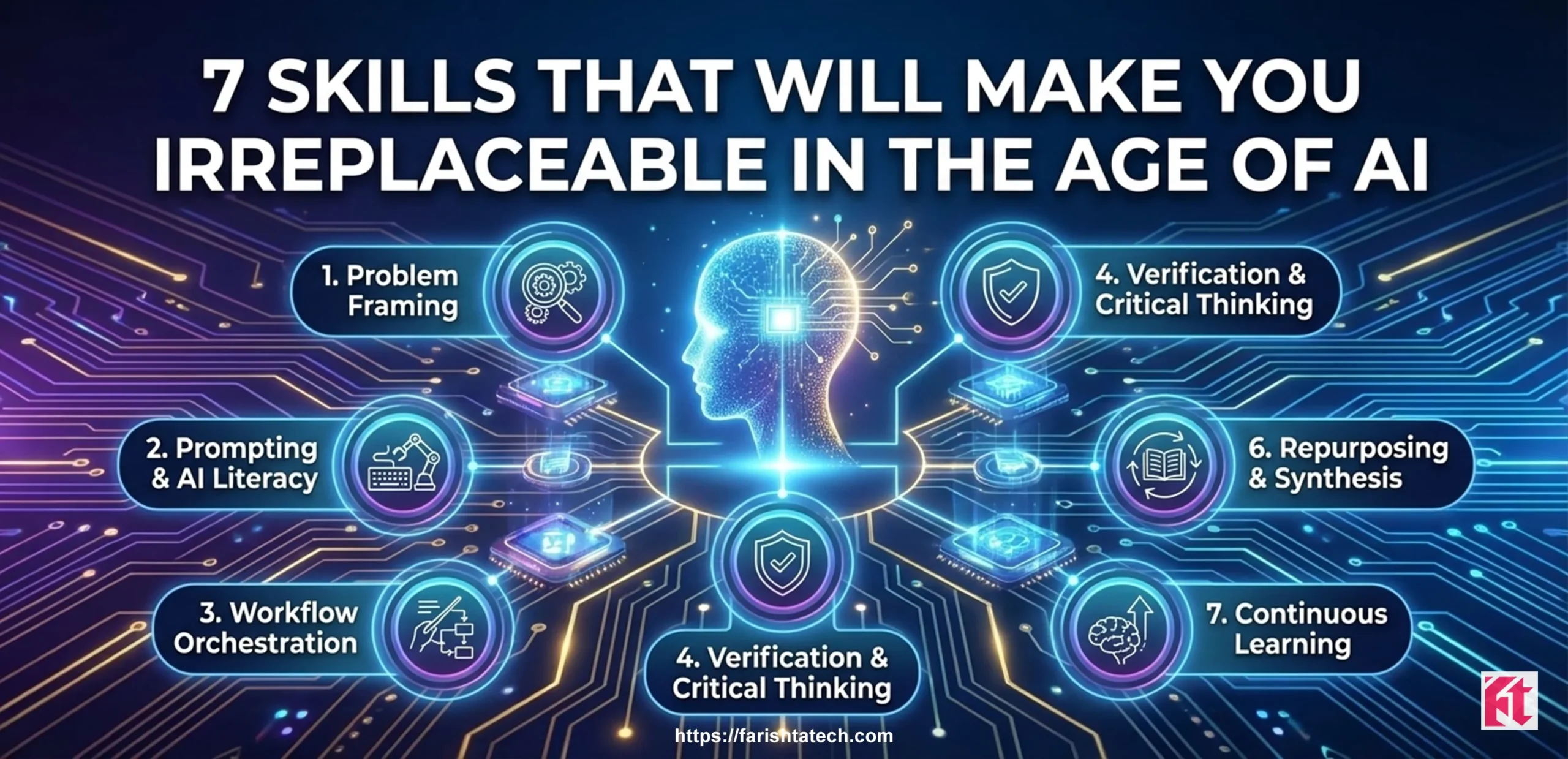
AI is reshaping the workforce—not by eliminating jobs, but by redefining roles. Routine, repetitive tasks are increasingly handled by AI, allowing humans to focus on creativity, strategy, and problem-solving.
The future workplace will be defined by collaboration between humans and intelligent systems. Professionals who understand how to work alongside AI will become significantly more valuable.
- AI as a decision-support partner
- Hybrid roles combining domain expertise and AI tools
- Increased focus on critical thinking
- Continuous learning as a career requirement
5. Artificial Intelligence in Healthcare and Life Sciences
Healthcare is one of the most impactful areas of AI adoption. AI systems assist doctors in diagnosing diseases, predicting patient outcomes, and personalizing treatment plans. This leads to better care, reduced costs, and improved patient experiences.
AI-driven research accelerates drug discovery and medical innovation, reducing development timelines that once took decades.
- AI-assisted medical imaging
- Early disease detection through predictive analytics
- Personalized medicine
- Remote patient monitoring
6. AI Transforming Education and Learning Models
Traditional education systems struggle to meet individual learning needs. AI-powered learning platforms adapt content based on student behavior, performance, and preferences.
Education is becoming more personalized, accessible, and outcome-driven. AI tutors, automated assessments, and learning analytics are transforming how knowledge is delivered and measured.
- Adaptive learning systems
- Real-time feedback and assessment
- AI tutors and virtual classrooms
- Data-driven educational insights
7. Smart Cities and Sustainable Development
AI is enabling the development of smart cities that optimize resources, reduce waste, and improve quality of life. Urban infrastructure powered by AI can respond dynamically to changing conditions.
From traffic management to energy optimization, AI-driven systems are essential for sustainable urban growth.
- AI-powered traffic control systems
- Smart energy grids
- Predictive maintenance for infrastructure
- Public safety analytics
8. Artificial Intelligence in Cybersecurity
Cyber threats are becoming more sophisticated, making traditional security methods insufficient. AI enables real-time threat detection, behavioral analysis, and automated response.
AI-driven cybersecurity systems learn from attack patterns and continuously evolve to counter new threats.
- AI-based intrusion detection
- Fraud prevention systems
- Identity and access intelligence
- Automated incident response
9. Creativity, Innovation, and AI as a Co-Creator
AI is no longer limited to analytical tasks—it is now a creative partner. From content generation to design assistance, AI accelerates innovation and experimentation.
Rather than replacing creativity, AI enhances it by enabling faster ideation and execution.
- AI-assisted content creation
- Design automation
- Rapid prototyping
- Creative experimentation at scale
10. Ethical AI and Responsible Innovation
As AI adoption increases, ethical considerations become critical. Responsible AI ensures fairness, transparency, accountability, and human oversight.
Organizations must prioritize trust and governance to ensure AI benefits society as a whole.
- Bias detection and mitigation
- Explainable AI systems
- Data privacy protection
- Human-in-the-loop governance
Conclusion: Building an Intelligent, Human-Centered Future
Artificial Intelligence is shaping the future by amplifying human intelligence, accelerating innovation, and redefining what is possible. The most successful organizations will be those that adopt AI responsibly, invest in people, and build systems that enhance—not replace—human potential.
The future powered by AI is not just automated—it is intelligent, ethical, collaborative, and deeply human.